- Congestion, Cost & Chaos: The Three Cs of Metro Markets. Here’s a Better Way.
Few days back I met senior leader from Delhi, he asked me “Your experience would be valued in a Metro city, you are wasting your talent & time settling in a small city like Chandigarh.
Wish he asked me, Why Here? I am ambitious, I see potential, I see growth, I want to make our Teir 2&3 Cities the heartland of India; grow and compete with our Metros!
To channelize the strength of our cities to not only invite brands but to harness the start up culture in these cities. Working in Hyperlocal broadcast media like RADIO, I ensured Chandigarh was competing with metros and TEIR 1 cities like Pune and Ahemdabad. During this journey I came across many MSMEs and start ups. I was pleasantly awestruck when I met Mr Saurabh the founder of Lahori Zeerahttp://LahoriZeera his vision “I want my brand to compete with likes of Coke & Pepsi” his operations base TRICITY, from where he expanded his distribution across India. Mr AbhayNoor Singh 3rd Generation harbinger of TYNORhttp://TYNOR a Global name in orthodontic care based out of Mohali operating out of world class office with in house R&D centre. Kudos! To these young Entrepreneurs creating Local to make it Global! These are just few am mentioning while i personally know MSMEs from JK, HP, UK, UP in North to East and West of our country.
So why are we still talking about the hustle, the grind, and the relentless pace of our big metros—Mumbai, Delhi, Bengaluru, while there’s no denying the energy and opportunity in those cities. I believe the real hustle isn’t in adding to the congestion of a bursting city but in building something new, something foundational, in the places where the next generation of India’s growth will come from. I’m talking about our vibrant Tier 2 and Tier 3 cities TIER 2&3 cities Indias Heartland. 🏙️
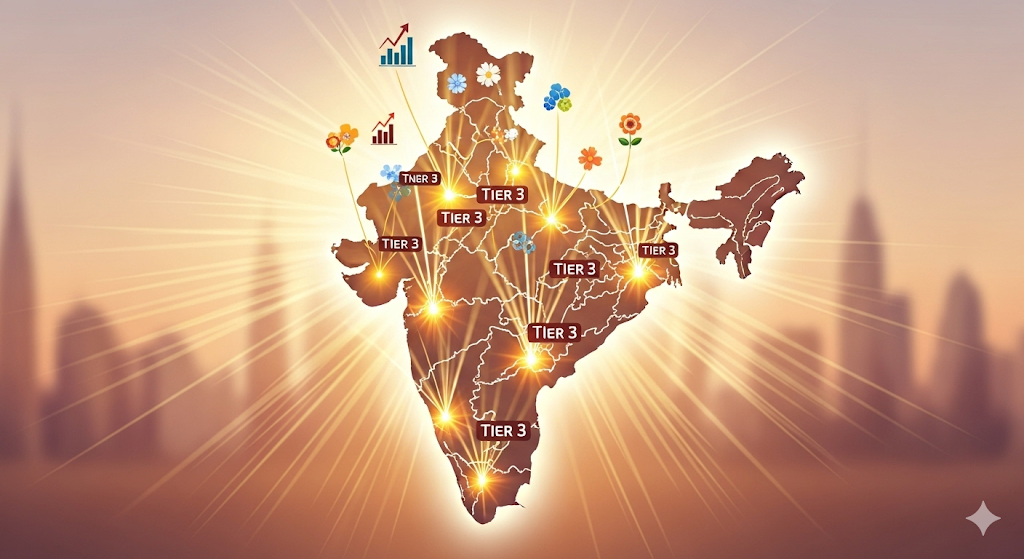
These aren’t just small towns anymore; they’re hubs of potential, poised to become the next centres for manufacturing and research-based brands. And the data backs this up.
- The Per Capita Advantage and the Digital Boom
The idea is simple: the cost of living in a metro is a huge burden. From exorbitant rent to daily expenses, a significant portion of a person’s income is simply swallowed up by the necessity of survival. But in places like Chandigarh, Jalandhar, Gandhinagar, and Gwalior, the story is different. Let’s look at Chandigarh. Its NSDP (Net State Domestic Product) http://NSDP per capita was ₹430,119 in 2024, a notable increase from the previous year. This puts its per capita income at a very high level, yet the cost of living remains far more manageable than in, say, Mumbai or Delhi. This creates a powerful economic dynamic: more disposable income. 💰
This isn’t just theory; we can see the results in consumer behavior, especially in online ordering. A recent report from TOI highlights how online spending is surging in urban households, with a predicted 115% increase in online shopping for the festive season. Quick commerce companies like Blinkit http://Blinkit and Zepto http://Zeptoare seeing massive growth in cities like Indore and Lucknow, with a 41% CAGR in the quick commerce market.
This tells me two things: first, the buying power exists, and second, the digital infrastructure is there to support it. People in these cities aren’t just online; they’re actively transacting, and they’re a huge, untapped market for brands. I strongly believe QCommerce is driving this shift!
- Let’s look at the New Era for Manufacturing and R&D the engines of Indias growth http://GCC
So, what’s the logical next step for brands? Instead of trying to cram more SKUs and operations into already saturated metros, they should be looking to these cities as their new operational bases. Why?
- Cost-Effective Operations: Land and labor costs are significantly lower in cities like Gwalior or Jalandhar compared to Mumbai or Gurugram. This can lead to massive savings, which can be reinvested into R&D, better products, or more competitive pricing.
- Talent Pool: These cities are home to a massive, skilled, and stable workforce who migrates to metros for lack of opportunities in their respective cities.
- Government initiatives: The Make in India and Start-Up India India’s Quantum Leap: A MULTIVERSE of On-Ground Superheroes or Boardroom Unicorns?schemes, as well as the Smart Cities Mission, are investing heavily in improving infrastructure and providing tax breaks, which in turn fosters a strong ecosystem for small and medium-sized enterprises (MSMEs). This creates a virtuous cycle of talent and employment. 🧑🏭
- Infrastructure on the Rise: Real Estate is moving from metros to these Hot beds of growth, The MSME initiatives by government under National Industrial Corridor Programme and projects under the Urban Challenge Fund are making setting up a factory or a research lab a very real possibility.
- Better quality of life: Working across all metros I realized I wasted half my energy being on the road than with my kids. Interestingly the Gen Z is also focusing on Quality of life. If these cities are focused the ancillary growth of education The New Frontier: Why North India is Fueling the Next Wave of IB Education Growth, health and infrastructure will automatically create a better quality at lesser cost of living.
Imagine a new R&D center for a global tech firm in Gandhinagar, leveraging the state’s robust infrastructure and skilled talent. Or a manufacturing hub for a consumer goods brand in Gwalior, serving not just the local market but also the surrounding regions, reducing logistical pressure on the overburdened metro supply chains.
- A New Vision for India: From Metros to the Heartland
Its time we put FAITH in our cities and harness the entrepreneurial energy into creating investment directed to places like Bhagalpur or Manipur? The recent news that a global professional services firm like PwC http://Pwc is opening an office in Nagpur isn’t just a headline; it’s a blueprint. It proves that the talent pool, infrastructure, and a conducive business opportunity can create a thriving business environment that can exist beyond the traditional metros. Foreign brands are recognizing the strategic advantage of lower operational costs and access to a fresh talent pool. Its time our homegrown brands and startups lead this change.
- The Peace Dividend: Economic Development in Srinagar & the Northeast will Pave the Way for a Stable India.
This isn’t just about business; it’s about national integration and creating a more balanced and peaceful society. Opening opportunities in cities like Srinagar and Siliguri means creating economic stakes for local communities. It gives the youth a reason to stay, innovate, and contribute to their own regions, reducing the need for migration and the strain on already overcrowded megacities. The government’s Start-Up India initiative needs to be a truly pan-Indian movement, with incubation centers and funding pipelines reaching the Northeast and Jammu & Kashmir, not just the usual suspects.
Per capita income data from a recent report on Siliguri reveals average annual salaries of over ₹16.6 lakhs for a significant portion of its workforce, highlighting a robust economic base and a demographic with spending power. A similar economic survey of Jammu & Kashmir shows that the UT’s real GSDP is expected to grow, with a focus on high-value crops and handicrafts, which directly translates to employment for lakhs of artisans. This data isn’t just numbers; it’s a testament to the untapped potential waiting to be harnessed.
- The Next Silicon Valley Isn’t a Valley. It’s a Movement in our TEIR 2 & 3 cities
It’s time to shift the narrative from “Indians making America great” to “Indians making India great.” ✨ The true measure of our nation’s progress won’t be in the success of our diaspora abroad, but in the equitable and inclusive growth we foster right here at home. This is more than just an economic strategy; it’s a moral imperative. By focusing on emerging cities, we’re not just creating business centers—we’re building a foundation for peace and prosperity across the entire country, including regions that have been historically marginalized.
- The Great Indian Economic Migration: Reversing the Flow and Building a Future at Home.
The more brands recognize and act on this opportunity, the more they will drive employment and infrastructure development in these cities. This isn’t corporate fluff; this is real, on-the-ground work that will create a more balanced and sustainable economic landscape for the entire nation. My belief is that a true hustle is about being the first to see the next big thing, and for me, that’s the rise of India’s Tier 2 &3 cities. It’s time to demand a future where prosperity isn’t confined to a few crowded megacities, but is spread across the length and breadth of our incredible country. The hustle is real, and it’s time to bring it home to our cities.
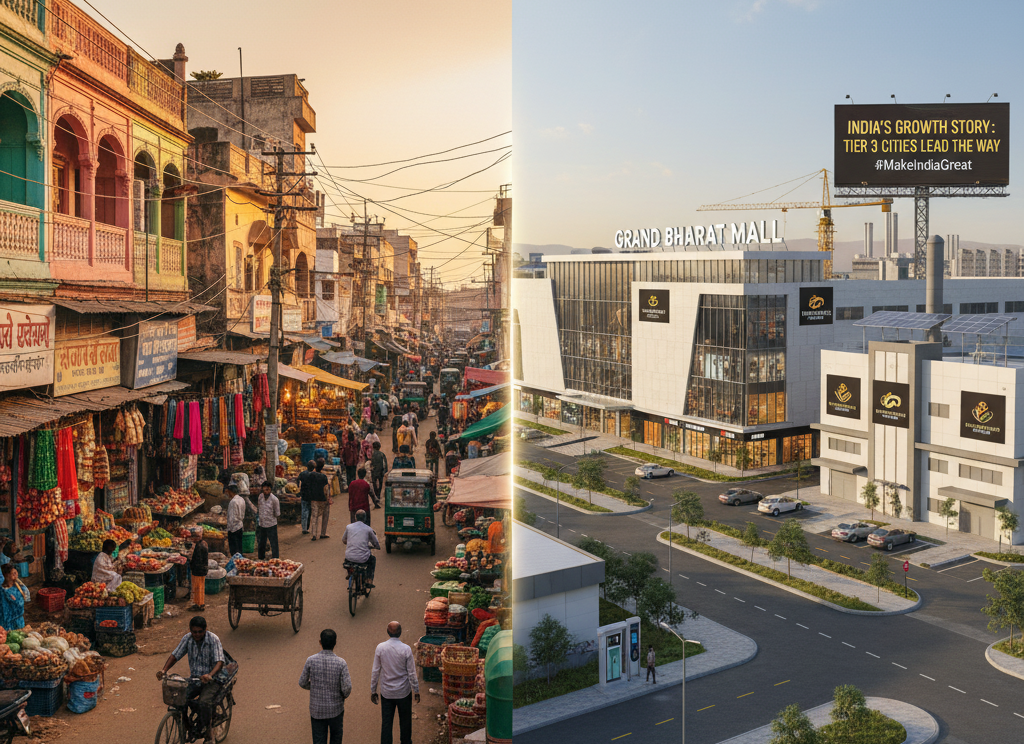
Do you agree with me? Do we hustle for India? Do we continue to stay tangled in Corporate Fluff? Can Tier 2/3 cities ideate and innovate?
#MakeIndiaGreat #Tier2Cities #StartUpIndia #GrowthFromWithin #EconomicDecentralization #VocalForLocal #IndiaGrowthStory @Saurabh @LahoriZeera @AbhayNoor @TYNOR #TOI #Radio #MSMEs #QCOMM #GCC #NaMo