
The New Frontier: Why North India is Fueling the Next Wave of IB Education Growth – The Geopolitical Uncertainties OR The Indian Markets Certainty
For decades, the narrative of premier education in India was dominated by a few metropolitan hubs, primarily in the South and West or sending them Abroad. But a quiet, yet powerful, transformation is underway. A seismic shift in aspirations, economics, and pedagogy is turning North India—from the bustling corridors of Delhi-NCR to the planned avenues of Chandigarh and the heritage cities of Jaipur and Lucknow—into the new powerhouse for the International Baccalaureate (IB) curriculum and moving paradigm from Studying Abroad to Studying In North India.
But why now? And why North India? The region is no longer just catching up; it’s becoming the new flavour for IB’s expansion in India, driven by a unique confluence of factors that go far beyond just a desire for an “international” tag.
1. The Economic Engine Meets a New Definition of Success
The most visible driver is economic. North India, particularly the Delhi-NCR region (Gurgaon, Noida, Faridabad), has become a magnet for multinational corporations, a hotbed for startups, and home to a rapidly expanding affluent class. This economic prosperity has created a generation of parents with significant disposable income.
However, the crucial difference today is how they choose to invest it.
2. The Aspirational Shift: From ‘Topper’ to ‘Thinker’
This leads to the most profound driver: the shift in parental aspiration. The North Indian parent of 2025 is increasingly wary of the high-pressure, mark-sheet-driven culture of traditional boards like CBSE and ICSE. They’ve witnessed the mental health toll and the stifling of creativity.
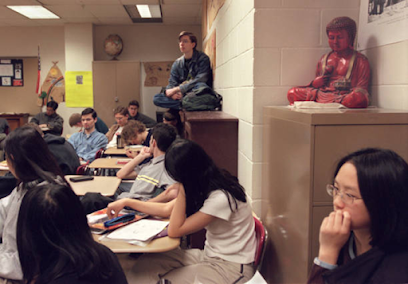
The IB’s philosophy presents a compelling alternative:
- Inquiry-Based Learning: Instead of memorising facts, students are taught to ask why. This resonates with parents who want their children to be problem-solvers, not just repositories of information.
- Holistic Development: The IB’s emphasis on Creativity, Activity, Service (CAS), the Theory of Knowledge (TOK), and the Extended Essay (EE) promises a well-rounded individual, not just an academic machine.
- Critical Thinking over Cramming: In a world saturated with information and AI, the ability to think critically, analyse sources, and form independent opinions is the ultimate future-proof skill. North Indian parents are recognising this faster than ever.
3. Geopolitical Shifts and the Rise of North India as an IB Hub
The current geopolitical shifts, specifically the uncertainty surrounding the United States and the ongoing conflict involving Russia, are acting as powerful catalysts, dramatically accelerating North India’s emergence as a prime growth market for the International Baccalaureate (IB) and the international universities that favour its curriculum.
This isn’t happening in a vacuum. These global “push” factors are converging perfectly with powerful domestic “pull” factors, creating a new educational paradigm.
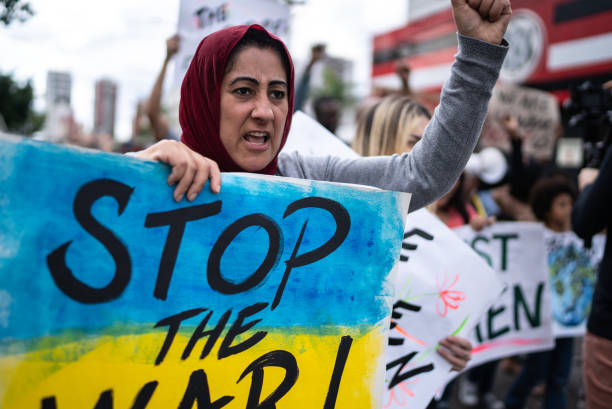
Here’s a breakdown of how this dynamic works:
1. The “Push” Factors: Diminishing Certainty Abroad
For decades, the default aspiration for affluent North Indian families was sending their children to the US or, to a lesser extent, countries like Russia for specific courses like medicine. This certainty is now eroding.
The “Uncertain US”: A Fading Guarantee
- Visa Volatility: The H-1B visa lottery system, coupled with fluctuating policies around Optional Practical Training (OPT) for student graduates, means that a multi-crore rupee investment in a US degree no longer guarantees a long-term career path there. Parents are increasingly asking, “Is the return on investment worth the risk?”
- Soaring Costs & Safety Concerns: The astronomical cost of American higher education, combined with growing parental anxiety over campus safety and social-political divisions, makes the prospect less appealing than it was a decade ago.
- The Perception Shift: The “American Dream” is being re-evaluated. Families are now seeking stability and a more predictable trajectory for their children, which the US currently struggles to offer.
The “Warring Russia” & Eastern European Instability:
- Disruption and Distrust: The Russia-Ukraine conflict has had a direct, televised impact on Indian families. The dramatic evacuation of thousands of Indian medical students from Ukraine shattered the perception of Eastern Europe as a stable, low-cost education destination.
- Loss of a Key Market: Russia and its neighboring countries were a significant market for North Indian students, especially for medical education. With that region now seen as volatile and risky, families are forced to look for credible, high-quality alternatives.
2. The “Pull” Factors: India’s Rise as a Credible Alternative
As traditional outbound routes become less certain, a robust and attractive domestic ecosystem is rising to meet the demand. This is where the opportunity for the IB curriculum explodes.
- The Emergence of ‘Global-Standard’ Indian Universities:
- North India and its surrounding regions are now home to a critical mass of world-class private universities like Ashoka University, Shiv Nadar University, O.P. Jindal Global University, and Flame University. These institutions offer a liberal arts, inquiry-based pedagogy that is ideologically aligned with the IB philosophy. They actively recruit IB students, valuing their research skills and critical thinking abilities.
- The result: A student can now receive a globally competitive education within India, taught in a similar style to a top Western university.
- Transnational Education (TNE) – The Game Changer:
- The Indian government’s policy shift allowing foreign universities to establish campuses in India is a monumental development. International universities now see India not just as a market to recruit students from, but a market to establish a presence in. This creates a massive demand for students who are “ready” for their teaching style—students who are graduates of the IB programme.
- The New Cost-Benefit Analysis: A North Indian parent is now faced with a new calculation: Why spend upwards of ₹2 crore on a US degree with visa uncertainty, when they can get a comparable quality of education at a top Indian private university for ₹40-60 lakh, or at a foreign university campus in India for a little more? The value proposition of studying in India has never been stronger.
3. The IB: The Perfect Bridge for a New Era
The IB curriculum is uniquely positioned at the intersection of these push and pull factors.
- Fulfilling the “Global” Aspiration, Domestically: For parents, the IB offers the “international” brand of education they desire—critical thinking, global perspective, holistic development—without the mandatory requirement of sending their child abroad into an uncertain environment.
- Creating ‘Plug-and-Play’ University Candidates: An IB graduate is the ideal candidate for the new Indian educational landscape. Their training in research (Extended Essay) and critical analysis (Theory of Knowledge) makes them perfectly suited for the pedagogy of both a top-tier Indian university like Ashoka and a foreign university campus in India.
- Keeping Options Open: An IB Diploma keeps all doors open. It makes a student a top contender for universities in Canada, Australia, or the UK (the new preferred outbound destinations) while simultaneously making them a prime candidate for the best institutions at home. It’s a curriculum that hedges against global uncertainty.
4. The Scope for Growth and the Challenges Ahead
The growth trajectory is steep, but the journey is not without its hurdles.
Opportunities:
- Tier-II Cities: The next wave of growth lies beyond the NCR. Cities like Lucknow, Jaipur, Chandigarh, Dehradun, and Ludhiana have a burgeoning upper-middle class that is beginning to explore education beyond the traditional choices.
- Teacher Training: The demand for high-quality, IB-certified educators will skyrocket, creating a new professional avenue in the education sector.
- Curriculum Adoption: More established schools may begin offering the IB Diploma as a parallel option to cater to diverse student needs.
Challenges:
- The Cost Factor: IB education remains expensive, limiting its reach to a small fraction of the population.
- Cultural Inertia: The societal obsession with board exam percentages and entrance coaching for engineering/medical is still deeply entrenched and will take time to overcome.
- Quality Control: Ensuring that the true inquiry-based spirit of the IB is maintained and not diluted into another competitive race is the biggest challenge for schools and the IB board itself.
Conclusion
The geopolitical shifts have fundamentally altered the risk-reward calculation for international education. International universities and the IB board now see North India not just as a source of students for their home campuses, but as a vibrant, self-sustaining market with a growing ecosystem of high-quality institutions.
The growth model is shifting from recruitment to partnership and presence. The demand is no longer just for a foreign degree, but for a global standard of education. Because the IB curriculum is the primary feeder for this standard, its growth in North India is not just likely; it is an inevitable consequence of these powerful global and local forces colliding.
The rise of the IB in North India is not a fleeting trend. It’s a reflection of a region in profound transition—economically confident, globally connected, and intellectually ambitious. North Indian parents are making a conscious choice to move beyond the legacy systems, seeking an education that prepares their children not just for an exam, but for a complex and ever-changing world.
This “new flavour” is, in fact, the taste of the future of education in India, and North India is currently its most exciting laboratory.
What are your thoughts on this shift? Are you a parent or educator in North India with experience of the IB? Share your perspective in the comments below!
#IBeducation #IBcurriculum #IBEducationInIndia #STUDYINGABROAD #INDIA #Plug&Play #Growth #EducationFee #STUDYInINDIA #HARVARDInINDIA #WarringNations #IndianVsWesternUniversities #NorthIndia #IBNewFlavour